
India’s cricket calendar in 2026 doesn’t unfold like a polite itinerary. It arrives in chapters that clash: a home World Cup early in the year, an IPL break that slices the momentum, then a run of bilateral series that decide who actually owns each format. The headline act is the ICC Men’s T20 World Cup, co-hosted by India and Sri Lanka from 7 February to 8 March 2026, which puts knockout pressure on selection thinking before the year has even settled.
Beyond that, the schedule is dense enough to make “form” feel like a moving target: New Zealand in January, Afghanistan and England in mid-year, Tests in Sri Lanka, then more white-ball volume as the year closes. What makes 2026 interesting is not just the list of opponents, but the talking points that keep returning: roles over reputations, workload over bravado, and the quiet arithmetic of points tables.
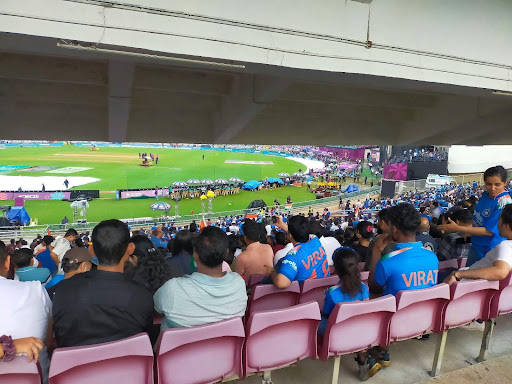
The World Cup comes early, and it comes loud
A February-to-March World Cup changes the emotional weather. Preparations become shorter, squads become less forgiving, and every “we’ll revisit that later” decision gets dragged into the present. The tournament’s timing also makes conditions a front-page topic, because dew, toss, and venue pace can turn tidy strategies into sudden improvisation, especially in night games.
The tactical conversations are already familiar, but sharper at World Cup volume: can India field two genuine powerplay bowling plans, can the middle overs be controlled without killing wicket-taking intent, and can the batting order survive a bad start without panic? In T20, calm is often just preparation in a convincing disguise.
The warm-up that refuses to be gentle
Before the World Cup spotlight, India begins 2026 with a home series against New Zealand from 11 to 31 January, scheduled as three ODIs and five T20Is. On paper, it looks like a warm-up; in practice, it’s a very clean mirror. New Zealand rarely gifts chaos, so errors tend to be self-authored and therefore harder to explain away.
This series is also a stress test for roles. ODIs ask who can build without stalling and who can finish without gambling; T20Is ask who can win the powerplay with ball or bat without turning the rest of the innings into damage control. By the time the final match is done, the debates usually stop being philosophical and start being specific.
The return of consequence
After the World Cup and the IPL window, India’s year leans back toward formats that punish impatience. The 2025-27 ICC World Test Championship cycle sits underneath the calendar like a tide chart: it isn’t loud, but it moves everything. India’s August tour of Sri Lanka is scheduled as a two-Test series, and those matches are rarely generous to visiting batters.
Sri Lanka Tests bring old questions into bright light: who plays spin with soft hands, who can score without forcing, and who can take wickets when the ball isn’t doing you favours? Just as importantly, workload becomes strategy. If fast bowlers are treated as disposable, the season eventually collects payment.
Why the MI Cape Town partnership matters
MI Cape Town are not a novelty act. They are a flagship SA20 franchise, based at Newlands in Cape Town, with Rashid Khan listed as captain and Robin Peterson as coach, and they sit inside the wider “MI family” that grew from the Mumbai Indians brand into a global franchise ecosystem.
MelBet’s newly announced partnership with MI Cape Town is being pushed through product integration rather than slogans: a partner page has been added to the Our Partners area, a branded team video is embedded there, and the team is now visible in the footer so it stays present while users move between fixtures and stats. In a year when fans jump between the World Cup, the IPL, and franchise cricket abroad, that kind of repetition turns a badge into a habit. The habit can spill into an online cricket bet when someone has already done the dull work of checking venue patterns and match-ups. It is marketing, yes, but it also mirrors how cricket attention works now: fragmented, mobile, and happiest when everything is one tap away.
The long middle of the year
Away from the World Cup, India’s 2026 schedule becomes a drumbeat. The published FTP-based outline includes a home series against Afghanistan in June (a Test and three ODIs), a July limited-overs series involving England, Tests in Sri Lanka in August, three T20Is in Afghanistan in September, a West Indies white-ball tour to India in September-October, a full tour of New Zealand in October-November, and a Sri Lanka white-ball set in India in December.
This is where “bench strength” stops being a slogan. White-ball volume tests whether replacements can be more than placeholders, and whether leadership groups can keep tactics consistent across rotating squads. The strongest teams in modern cricket are often the ones that look the same even when the names change.
Process beats impulse
Cricket betting in 2026 is often sold as instant genius, but the serious version looks boring: note the pitch, note the match-ups, note the bowling plans, then decide. A good betting app helps only if it keeps those notes close to the odds and stops you from turning every over into a referendum on your mood. The clean approach is to choose decision windows then watch the rest with your hands off the screen. When the reasoning is written down before the click, the wager stays proportionate to the match rather than trying to replace it.
The talking points that outlast any one fixture
By the end of 2026, the year’s judgement usually crystallises into a few blunt questions. In T20, success will be read through role clarity and finishing quality, not just highlight reels. In ODIs, combinations matter because the 2027 pathway is always looming in the background. And in Tests, the old truth remains stubbornly modern: teams rise when they can take 20 wickets, and they stay up when they have batters who can look comfortable while doing something as unfashionable as leaving the ball.